
Place Bet in Horse Racing: The Complete UK Betting Guide
Data-driven insights for smarter place bets
 Available in US
I still remember the 2019 Grand National that changed how I think about betting. I had backed Tiger Roll to win at 4/1 – decent odds, solid form. He finished second. My slip was worthless. The punter next to me at Aintree? He had placed a place bet on the same horse and walked away with a profit while I tore up my ticket. That moment crystallised something I now tell every new bettor: a place bet in horse racing is not the cautious option – it is the mathematically informed one.
Place betting sits at the heart of UK racing culture, and the numbers prove it. Remote betting on horse racing generated £766.7 million in Gross Gambling Yield last financial year, making it the second-largest betting vertical after football. Horse racing accounts for approximately 5% of total UK gambling revenue – a market where understanding the difference between a placed finish and a winning one determines whether you leave with profit or regret.
Over nine years analysing racing odds, I have seen brilliant selections fail to win by a nose and rank outsiders sneak into the places at massive prices. This guide exists because most betting resources gloss over the mechanics that actually matter – the field sizes that determine your place terms, the fractions that calculate your returns, and the strategic scenarios where backing for a place beats chasing the win. Let me show you how this market really works.
The Five Things Every Place Bettor Needs to Know
- A place bet wins when your horse finishes in the paying positions – typically 1st, 2nd, or 3rd depending on field size. No need to pick the winner outright.
- Place terms shift based on runner numbers: 5-7 runners pays two places at 1/4 odds; 8-15 runners pays three places at 1/5 odds; 16+ runner handicaps pay four places.
- The calculation is straightforward: multiply your stake by the odds, divide by the fraction, then add your stake back. A £10 bet at 8/1 with 1/4 terms returns £30.
- Each-way costs double because it combines a win bet and a place bet. Place-only wagers through exchanges or Tote give you the place portion without funding the win side.
- Best Odds Guaranteed and extra place promotions can significantly boost returns – at Cheltenham 2026 alone, one major operator paid over £50 million in BOG enhancements.
What Is a Place Bet in Horse Racing?
Three years into my career as a racing odds analyst, I had a conversation with a veteran bookmaker at Newmarket that stuck with me. "Most punters," he said, "think place betting is for people who lack confidence. The smart ones know it is for people who understand probability." He was right. A place bet transforms the betting proposition from needing your horse to beat every rival to needing it to finish among the top few.
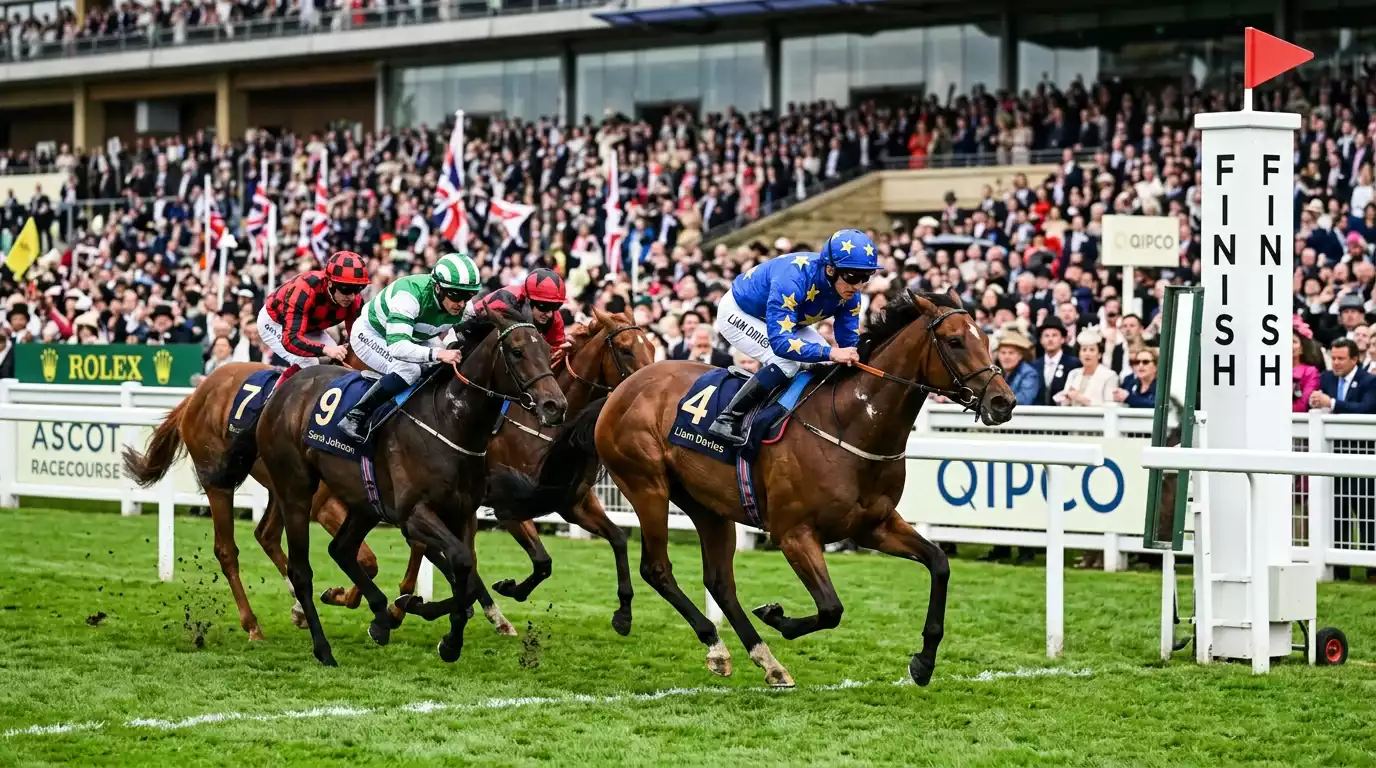
Place bet – a wager that pays out if your selected horse finishes in one of the designated paying positions, regardless of whether it wins. The number of places paid and the fraction of odds applied depends on the size of the field and the type of race.
The mechanics work like this: when you back a horse to place, your bet settles as a winner if that horse finishes first, second, third, or sometimes fourth – depending on how many runners line up. Unlike a win bet, which requires your selection to cross the line ahead of everyone else, a place bet gives you multiple routes to profit. In a race with nine runners, for example, you have three chances to collect rather than one.
This distinction matters more than most guides acknowledge. Horse racing generates immense betting interest precisely because outcomes cluster around a competitive middle ground. The favourite wins roughly 30% of the time in UK racing, but favourites finish in the places at closer to 65%. That gap between win rate and place rate is where informed bettors find value.
The connection between racing and betting runs deep in British culture. As the European Commission noted when clearing state aid rules for the sport, racing and betting have a unique interdependency that goes back over 200 years. A day at the races includes, for most participants, betting on horse races – and place betting has been central to that relationship since bookmakers first chalked odds on boards.
Understanding the place bet also means understanding what it is not. A place bet differs from an each-way bet, which combines a win stake and a place stake into a single wager at double the cost. A place bet stands alone. You are backing the horse only for a placed finish. If it wins, you still collect – winning counts as placing – but the odds reflect the place terms rather than the full win price.
The concept applies across all UK horse racing: Flat turf, all-weather, National Hunt hurdles, and steeplechases. Each code operates with the same fundamental place betting structure, though field sizes vary considerably between race types. Jump racing averages smaller fields than Flat racing, which directly affects how many places get paid and at what fraction – details I will unpack in the following sections.
How Place Terms Work: Runners, Positions, and Fractions
Last spring, I watched a punter at Sandown argue with a bookmaker over why his place bet on a seven-runner race only paid two places instead of three. He had assumed all races worked the same way. They do not. Place terms shift based on field size, and knowing exactly when those thresholds change is fundamental to making informed wagers.
The UK operates on a standardised system that every licensed bookmaker follows. The number of runners declared at the off determines how many places get paid and at what fraction of the full odds. Get these numbers wrong and you miscalculate your returns before the race even starts.
| Runners | Places Paid | Fraction of Odds | Example Race Type |
|---|---|---|---|
| 2-4 | No place betting | N/A | Match races, small fields |
| 5-7 | 1st, 2nd | 1/4 | Many Jump races |
| 8-15 | 1st, 2nd, 3rd | 1/5 | Standard Flat races |
| 16+ (handicap) | 1st, 2nd, 3rd, 4th | 1/5 | Big-field handicaps |
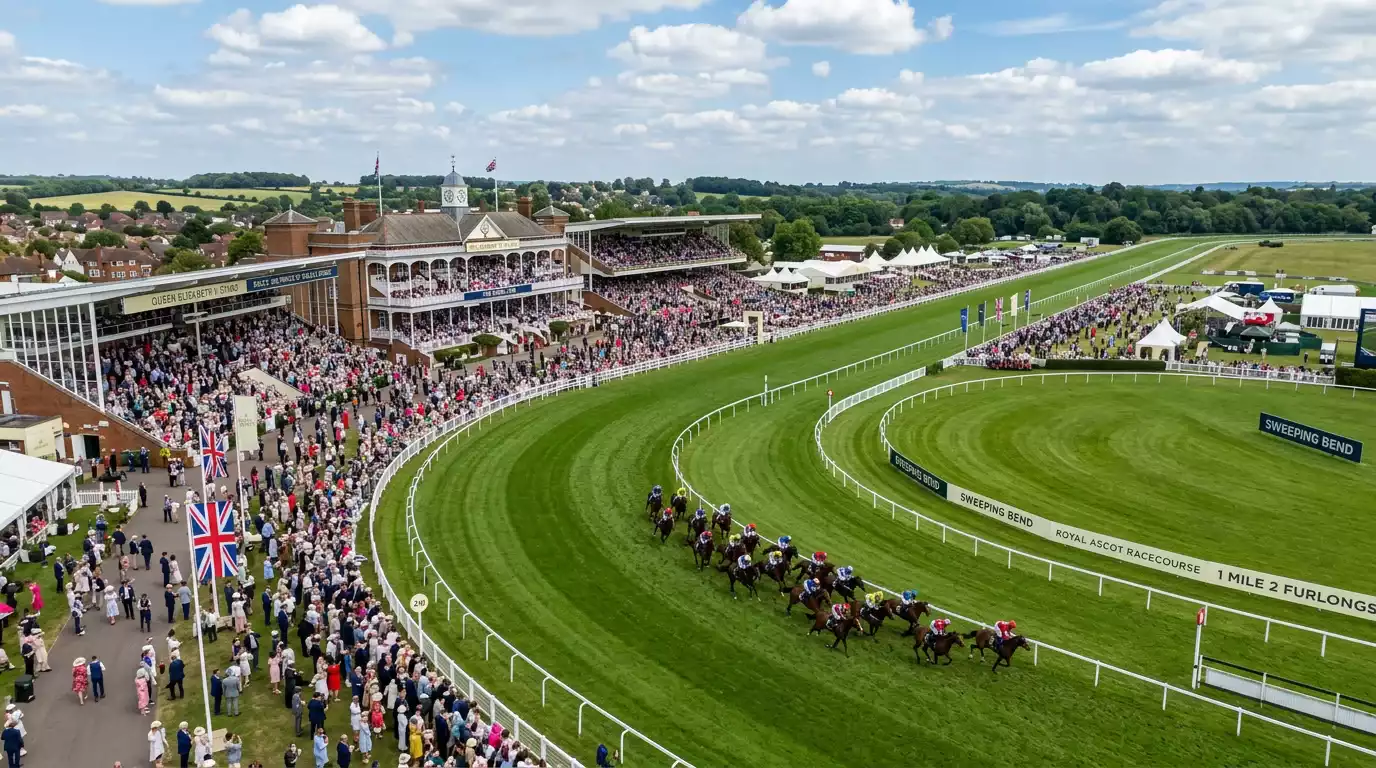
These thresholds connect directly to real racing patterns. The average Flat race in 2025 featured 8.90 runners – placing most Flat contests into the three-place category. Jump racing averaged 7.84 runners per race, meaning a significant proportion of National Hunt events fall into the two-place bracket. Premier fixtures tell a different story: top Flat meetings averaged 11.02 runners, while premier Jump cards hit 9.41 runners, both comfortably in three-place territory.
Here is where the data gets concerning for place bettors. Nearly 28% of races between April and May 2025 had six or fewer runners – the second-highest proportion in two decades. Small fields restrict your place betting options dramatically. With five runners, you need your horse in the top two at reduced odds. With four runners or fewer, place betting disappears entirely.
Always check the number of declared runners before placing your bet, not when you first look at the card. Withdrawals between overnight declarations and race time can shift a race from three places down to two, changing both your odds and your probability of success. For a detailed breakdown of every field size scenario, see the complete guide to place terms by number of runners.
The 16+ handicap rule deserves particular attention. Only handicap races with sixteen or more runners qualify for four places – non-handicap races with big fields still pay just three. This distinction catches out bettors who assume runner count alone determines the terms. The race classification matters as much as the field size.
Understanding 1/4 and 1/5 Place Fractions
The difference between 1/4 odds and 1/5 odds sounds minor until you run the numbers. At 10/1, a 1/4 place pays £2.50 profit per pound staked; a 1/5 place pays £2.00. That 50p gap per pound adds up across a season of betting – and it explains why experienced punters pay close attention to which fraction applies.
1/4 Odds (Quarter the Price)
Applied to races with 5-7 runners
Higher return per unit staked
Fewer places paid (only 2)
Example: 8/1 becomes 2/1 for place
1/5 Odds (Fifth the Price)
Applied to races with 8+ runners
Lower return per unit staked
More places paid (3 or 4)
Example: 10/1 becomes 2/1 for place
The logic behind these fractions reflects probability. When only two places pay out, your chance of collecting is lower, so the bookmaker offers better fractional odds. When three or four places pay, more horses qualify, so the fraction shrinks to balance the book. Neither fraction is inherently better – they represent different risk-reward profiles that suit different betting situations.
Comparing Fractions on the Same Odds
Horse priced at 12/1, £10 stake
At 1/4 (5-7 runners): 12 ÷ 4 = 3/1 place odds. Returns £40 (£30 profit + £10 stake)
At 1/5 (8+ runners): 12 ÷ 5 = 2.4/1 place odds. Returns £34 (£24 profit + £10 stake)
Difference: £6 less return on the 1/5 terms
This arithmetic matters when assessing value. A 12/1 shot in a seven-runner field might offer better expected value than the same horse in a nine-runner race, even though more places pay in the larger field. The place bet odds calculator breaks down these scenarios step by step, but the core principle is simple: higher fractions mean higher payouts per place paid.
How to Calculate Place Bet Returns
A few years back, I ran a workshop for novice bettors at a Midlands racing club. The moment I wrote the place bet formula on the whiteboard, half the room looked nervous. By the end of the hour, everyone could calculate their returns in their head. The maths is not complicated – it just looks intimidating until you break it down.
The formula works in three steps: take your odds, divide by the fraction, then multiply by your stake and add the stake back. Written out:
Returns = Stake × (Odds ÷ Fraction) + Stake
That final addition of the stake represents getting your money back on top of your profit – the total amount the bookmaker hands you, not just your winnings. Let me walk through two scenarios that cover the most common situations.
Scenario 1: 1/4 Terms (5-7 Runners)
| Stake | £10 |
| Odds | 8/1 |
| Fraction | 1/4 |
| Calculation | 8 ÷ 4 = 2 (place odds) |
| Profit | £10 × 2 = £20 |
| Total Returns | £20 + £10 = £30 |
Your 8/1 horse becomes a 2/1 shot for place purposes. The bookmaker divides the win odds by four, creating the place price. A £10 stake at 2/1 generates £20 profit, plus your original £10 back makes £30 total.
Scenario 2: 1/5 Terms (8+ Runners)
| Stake | £10 |
| Odds | 10/1 |
| Fraction | 1/5 |
| Calculation | 10 ÷ 5 = 2 (place odds) |
| Profit | £10 × 2 = £20 |
| Total Returns | £20 + £10 = £30 |
Notice something? A 10/1 shot at 1/5 terms returns exactly the same as an 8/1 shot at 1/4 terms. This equivalence shows why you cannot judge place bets by win odds alone. The fraction determines the real price you are getting.
Working Through a Real Betting Slip
Suppose you fancy a horse priced at 14/1 in a twelve-runner handicap.
Step 1: Identify the terms – 12 runners means 1/5 odds, three places paid
Step 2: Calculate place odds – 14 ÷ 5 = 2.8/1
Step 3: Multiply stake – £5 × 2.8 = £14 profit
Step 4: Add stake back – £14 + £5 = £19 total returns
The same formula handles any combination of odds and fractions. For decimal odds users, convert fractional to decimal first (8/1 becomes 9.0), then apply the same logic. A 9.0 decimal price at 1/4 terms becomes (9.0 - 1) ÷ 4 + 1 = 3.0 in decimal place odds. Multiply by stake for total returns.
Where bettors trip up is forgetting to check which fraction applies before mentally calculating. An 8/1 shot in an eight-runner race pays worse than the same horse in a seven-runner race, because the terms shift from 1/4 to 1/5 when that eighth runner joins the field. Always confirm the declared runners before committing your stake.
Place Bet vs Each-Way: Key Differences
The question I get asked most often at racing events is simple: "Should I bet each-way or just place?" My answer depends entirely on what the punter is actually trying to achieve – because these two bet types serve fundamentally different purposes, despite both involving the place portion of a race.
An each-way bet is two bets rolled into one. When you stake £10 each-way, you are placing a £10 win bet and a £10 place bet simultaneously, for a total outlay of £20. If your horse wins, you collect on both parts. If it places but does not win, you lose the win stake and collect only the place portion. If it finishes outside the places, you lose both.
Each-Way Bet
Two separate wagers combined
Total cost: double your unit stake
Win returns both win and place payouts
Place-only returns lose the win stake
Standard at all UK bookmakers
Place-Only Bet
Single wager on placing
Total cost: your unit stake only
Same return whether horse wins or places
No win stake to lose
Available through exchanges and Tote
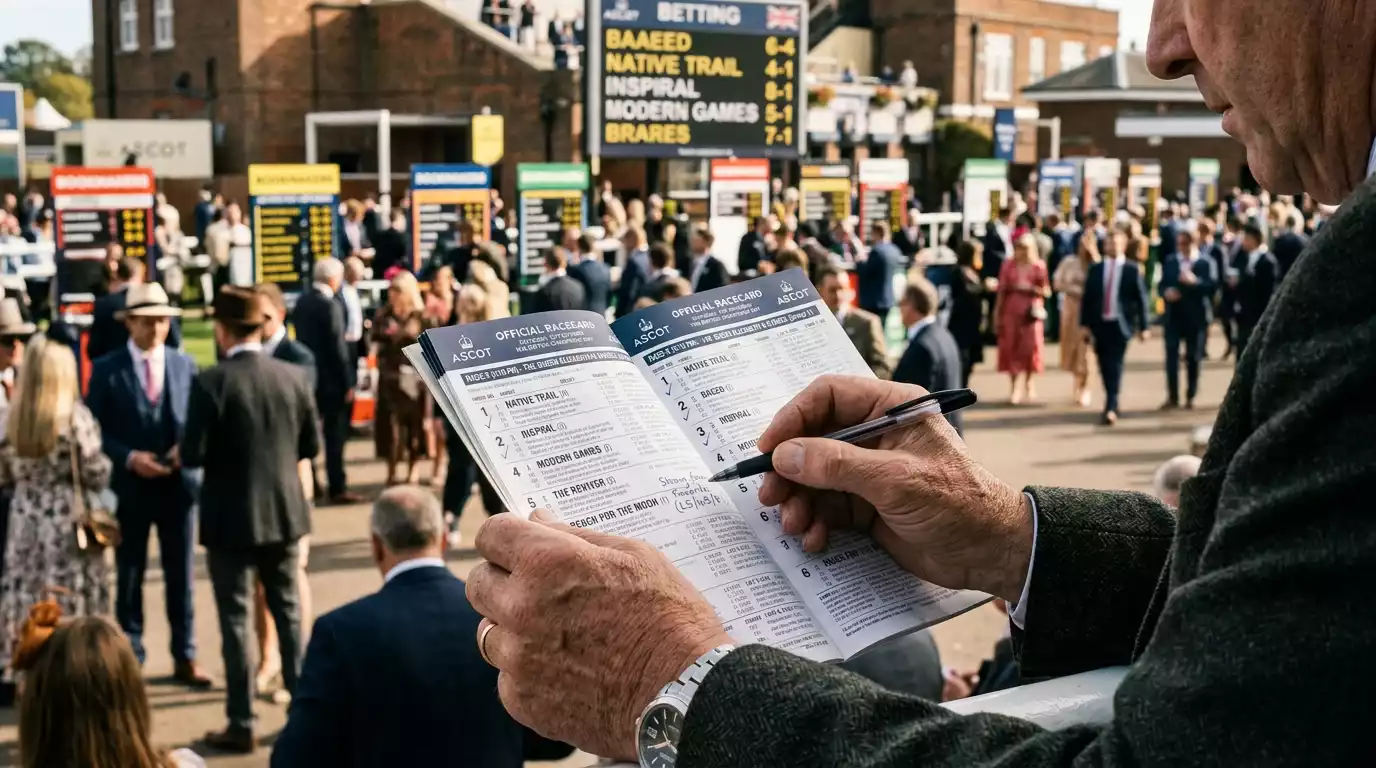
This structural difference changes the mathematics considerably. Each-way betting has surged in popularity – wagers on this bet type at Cheltenham increased by 25% in 2024 compared to the previous year. Punters like the hybrid nature: you get a runner in the win market and insurance if it hits the places instead. But that insurance comes at a cost.
The critical insight most guides miss: each-way is not always the better option, even when you rate a horse highly. If your analysis suggests a horse will place but is unlikely to win, why fund the win portion at all? A place-only bet at the same stake leaves more capital available for other opportunities. For a deeper examination of when each approach makes sense, the each-way betting explained article covers every scenario.
Place-only betting through traditional high-street bookmakers is not straightforward – most do not offer it as a standalone product. The Tote pools provide one avenue, with the Tote Place pool paying dividends to anyone whose horse finishes in the places. Betting exchanges offer another: you can back a horse in the dedicated place market without any win element attached. These markets operate independently, with their own odds determined by supply and demand among exchange users.
The practical difference shows up in your staking decisions. Say you want £20 of action on a horse to place. Each-way requires a £10 each-way stake (£20 total), with half that money riding on the win outcome you may not believe in. A £20 place-only bet through an exchange puts your entire stake where your conviction lies. The return if the horse places is higher relative to the risk you took.
Neither approach is universally superior. Each-way suits situations where you give your selection a genuine win chance and want maximum returns if it gets there. Place-only suits selections you expect to hit the frame but not necessarily triumph. Matching your bet type to your actual assessment of each horse separates informed punters from those who default to the same structure regardless of circumstance.
Where to Make Place Bets in the UK
Cheltenham Festival 2024 produced a statistic that surprised even veteran industry observers: more than 80% of bets were placed via mobile devices. The old image of punters crowding around on-course bookmakers or phoning in their selections has given way to thumbs tapping smartphone screens, often while standing in the same enclosures where their grandparents once queued at betting windows.
The UK market offers three main channels for place betting, each with distinct characteristics that affect how you approach your wagers.
Traditional bookmakers remain the dominant force in UK racing betting. Whether through mobile apps, desktop sites, or high-street shops, these operators offer each-way betting as standard, with the place portion calculated according to the standard terms. You cannot typically bet place-only through a traditional bookmaker – the each-way structure is baked into their retail model.
The Tote operates as a pool-betting alternative. When you bet into the Tote Place pool, your returns depend on the total pool size and how many winning tickets share the dividend. This can produce higher or lower returns than fixed-odds place bets depending on where the money flows. Heavy backing of a horse in the fixed-odds market does not automatically affect Tote dividends in the same way, creating occasional arbitrage opportunities for those watching both.
Betting exchanges complete the picture. These peer-to-peer platforms let you back or lay horses in dedicated place markets, entirely separate from win markets. Exchange place odds are set by other users rather than a bookmaker's margin, which can translate to better prices – particularly on less popular horses where bookmaker overround tends to be highest. The trade-off is lower liquidity on some events; niche midweek cards may have thin place markets compared to Saturday features.
On-course betting persists for those who attend meetings. The betting ring still operates at all 59 licensed UK racecourses, with on-course bookmakers offering each-way bets at terms that sometimes differ from online prices. Tote windows and self-service terminals provide pool access. The tactile experience of cash changing hands at trackside has declined – but for certain punters, there is no substitute for haggling with a rails layer in the final minutes before the off.
Mobile dominance shapes modern place betting practicalities. Real-time odds movement, instant bet placement, and in-play options mean decisions happen faster than ever. Wherever you choose to bet, the underlying place terms remain consistent – it is the odds, promotions, and user experience that differ between platforms.
Best Odds Guaranteed and Extra Places Explained
Cheltenham Festival 2026 delivered a headline that circulated through betting industry circles for weeks: one major operator paid out over £50 million in Best Odds Guaranteed enhancements alone. That figure represents pure additional value transferred from bookmaker to punter – money that bettors collected beyond what their original odds would have returned. Understanding BOG transforms how you approach early prices.
Best Odds Guaranteed works as a price protection mechanism. Take an early price on a horse, and if the Starting Price drifts higher by the time the race begins, you receive the better price. Your selection opens at 8/1 in the morning but goes off at 12/1? You collect at 12/1. The bookmaker absorbs the difference. If the price shortens instead, you keep your original 8/1.
BOG applies to the place portion of each-way bets at most major operators – meaning your place odds also benefit from any price drift. This doubles the enhancement potential on each-way wagers, which partly explains why industry-wide BOG payouts have reached eye-watering totals at major festivals.
The practical implication: backing horses early carries less risk than it once did. Before BOG became standard, taking a morning price meant gambling that the market would not move against you. Now, early birds capture any upward movement while remaining protected against shortening. The calculus favours early engagement, particularly on horses you rate as live each-way contenders at double-figure prices.
BOG typically excludes ante-post bets placed days or weeks before racing and often carries maximum payout limits per customer. Always verify which races qualify and what caps apply. The detailed mechanics, limitations, and strategies for maximising BOG value appear in the Best Odds Guaranteed guide.
Extra place offers operate on different mechanics. Instead of enhancing odds, these promotions expand the number of paying positions. A race that normally pays three places might offer four or five places through certain operators running promotional terms. Your horse finishes fourth in a standard three-place race? Normally a loser. Under extra place terms? A payout.
Bookmakers deploy extra places strategically, concentrating them on high-profile races where promotional spending generates customer acquisition and brand visibility. Major handicaps, festival features, and televised Saturday cards attract the heaviest extra place activity. Tracking which events carry enhanced terms has become part of the informed punter's weekly routine.
The value calculation requires care. Extra places increase your chance of collecting but do not change your fundamental odds. A horse worth backing at standard terms might offer even better expected value with extra places attached – but a poor selection remains poor regardless of how many positions pay out. The promotion enhances good analysis; it does not replace it.
Place Betting Strategy: When It Makes Sense
Two winters ago, I built a tracking spreadsheet for a syndicate that wanted to test a hypothesis: would systematic place betting on mid-ranked horses in big-field handicaps outperform their traditional win-focused approach? After six months and over 400 bets, the place strategy showed a 9% better return on investment. Not because place betting is inherently superior, but because it suited the specific conditions they were targeting.
Place betting makes strategic sense when certain conditions align. Large fields present the clearest opportunity. When 16+ runners compete in a handicap, four places pay out, giving you significantly more routes to profit than a three-place or two-place race. The favourite might dominate the win market while several capable horses jostle for the remaining places at generous odds.
Competitive races – where multiple horses hold realistic chances – suit place betting better than those with a dominant force. If one horse towers above its rivals, the win bet offers clear value. If five or six horses could finish in any order, the places become contested territory where your selection only needs to beat part of the field rather than all of it.
Alan Delmonte, Chief Executive of the Horserace Betting Levy Board, captured the industry's challenge when he noted that racing needs to ensure it is presented and structured in a way that is attractive to the modern consumer. Place betting accessibility is part of that – it offers entry points that feel less punishing than chasing outright winners in races where victory requires everything to fall perfectly.
The core strategic principle: place betting shifts risk from predicting exact outcomes to predicting competitive performances. A horse that finishes second, third, or fourth was running well – it just did not win. Place betting capitalises on that near-miss zone where strong form meets uncertain finishing order.
Where place betting struggles is in small fields and lopsided contests. A five-runner race with an odds-on favourite leaves only one place paying at 1/4 odds – the mathematics rarely justify the risk. Similarly, backing a 50/1 outsider to place when the first three in the betting have the race between them reflects hope rather than strategy.
Serious place bettors develop criteria that identify suitable races rather than suitable horses alone. Field size, race competitiveness, price structure, and place terms all feed into the assessment. A horse worth backing to place in a 14-runner handicap might be worth avoiding entirely in a six-runner conditions race at the same track. Context determines whether the bet makes sense, not just the selection itself. The place betting strategy guide develops these concepts with specific frameworks for race assessment.
Place Terms at Major UK Racing Events
The Grand National attracts casual bettors like no other race in the British calendar. Half of the estimated £250 million wagered on the 2025 renewal came from stakes of £5 or less – once-a-year punters picking names they like the sound of without necessarily understanding the mechanics beneath their selections. Those who do understand the place terms hold a significant edge.
Each major meeting operates with specific place betting characteristics shaped by field sizes, race types, and promotional activity. Knowing what to expect before you arrive – whether physically or via your mobile – prevents costly surprises when settling your bets.
Grand National
Runners: 40 maximum
Standard places: 4 (1/5 odds)
Enhanced: Often 5-6 with promotions
Turnover: £250m (2025)
Betting activity: 700% more than Gold Cup
Cheltenham Festival
TV audience: 1.8m peak (2025)
Handicaps: 4 places at 16+ runners
Championship races: 3 places typically
Each-way surge: +25% in 2024
BOG payouts: £50m+ (2026)
Royal Ascot
Field sizes: Often 15-25 in handicaps
Big-field handicaps: 4 places
Group races: 3 places (smaller fields)
Enhanced offers: Common on feature days
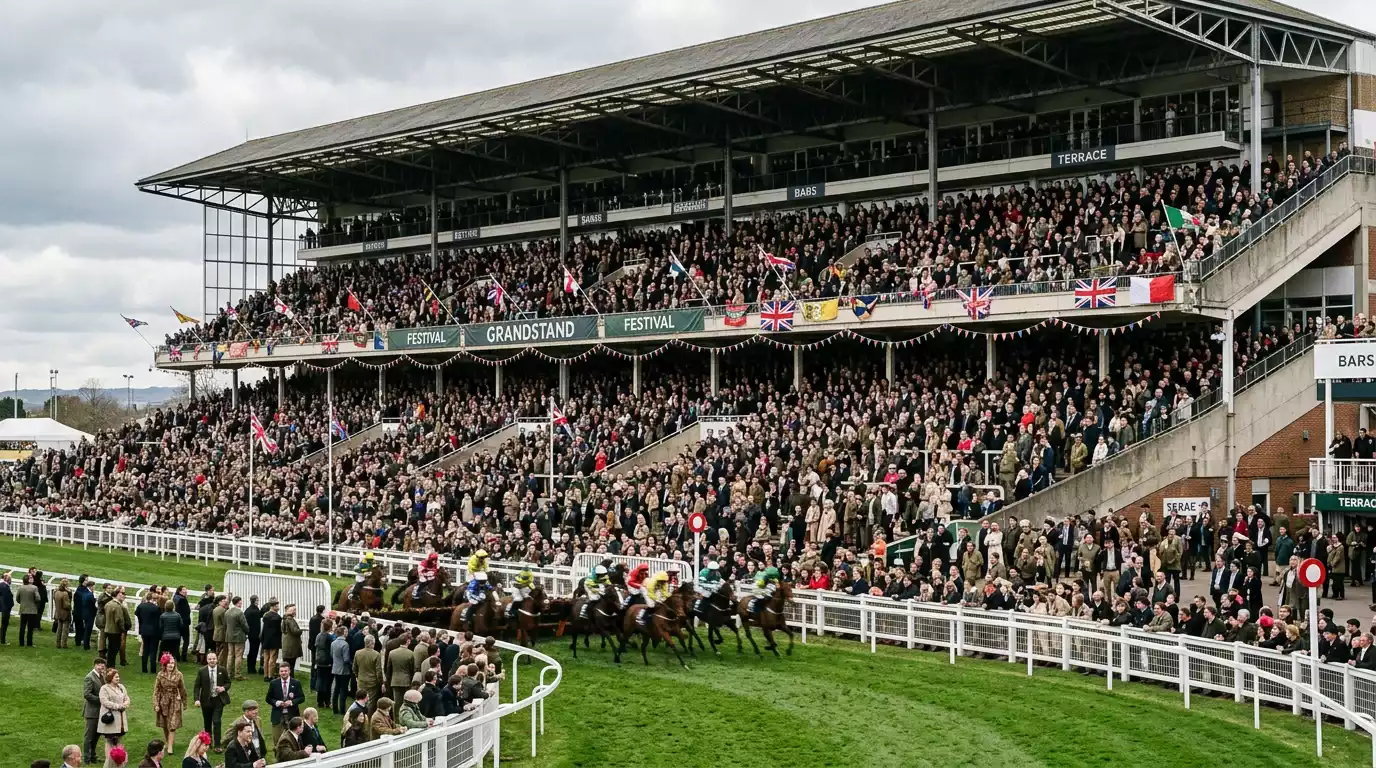
The Grand National generates approximately 700% more betting activity than the Cheltenham Gold Cup, despite the Gold Cup featuring higher-class horses in a more competitively weighted field. That disparity reflects casual participation – and creates opportunity for those who approach the race analytically rather than sentimentally.
Cheltenham Festival handicaps routinely attract fields of 20+ runners, triggering four-place terms. The festival's championship races – Gold Cup, Champion Hurdle, Queen Mother Champion Chase – tend to draw smaller, elite fields where three places pay. This split means your approach should differ between the festival's blue-riband events and its competitive handicaps.
Royal Ascot's heritage handicaps like the Royal Hunt Cup and Wokingham Stakes regularly see fields exceeding 25 runners. These cavalry charges offer exceptional place betting scope at big prices, with fourth place often paying out at double-figure starting prices. The Group races on the same cards present the opposite profile: small, select fields where place terms tighten.
Approximately 30% of Grand National bettors are first-timers or returning after a break. If you are among them, understanding that your bet offers four places at 1/5 odds in a 40-runner field already puts you ahead of those who tick boxes without knowing what they have backed.
The UK Horse Racing Betting Landscape
The numbers behind British racing tell a story of paradox. Levy income from betting on horse racing reached £108.9 million in 2024/25 – the highest yield since regulatory reforms in 2017. Yet beneath that headline success lies a trend that has HBLB executives reaching for cautionary language: betting turnover per race has fallen 8% year-on-year, 15% compared to two years ago, and 19% against three years ago.
"With Levy income having risen for a fourth consecutive period, it may seem counterintuitive that the Board continues to express caution about the sustainability of this trend. This wariness derives from an ongoing fall in betting turnover on British horse racing."
- Alan Delmonte, Chief Executive, Horserace Betting Levy Board
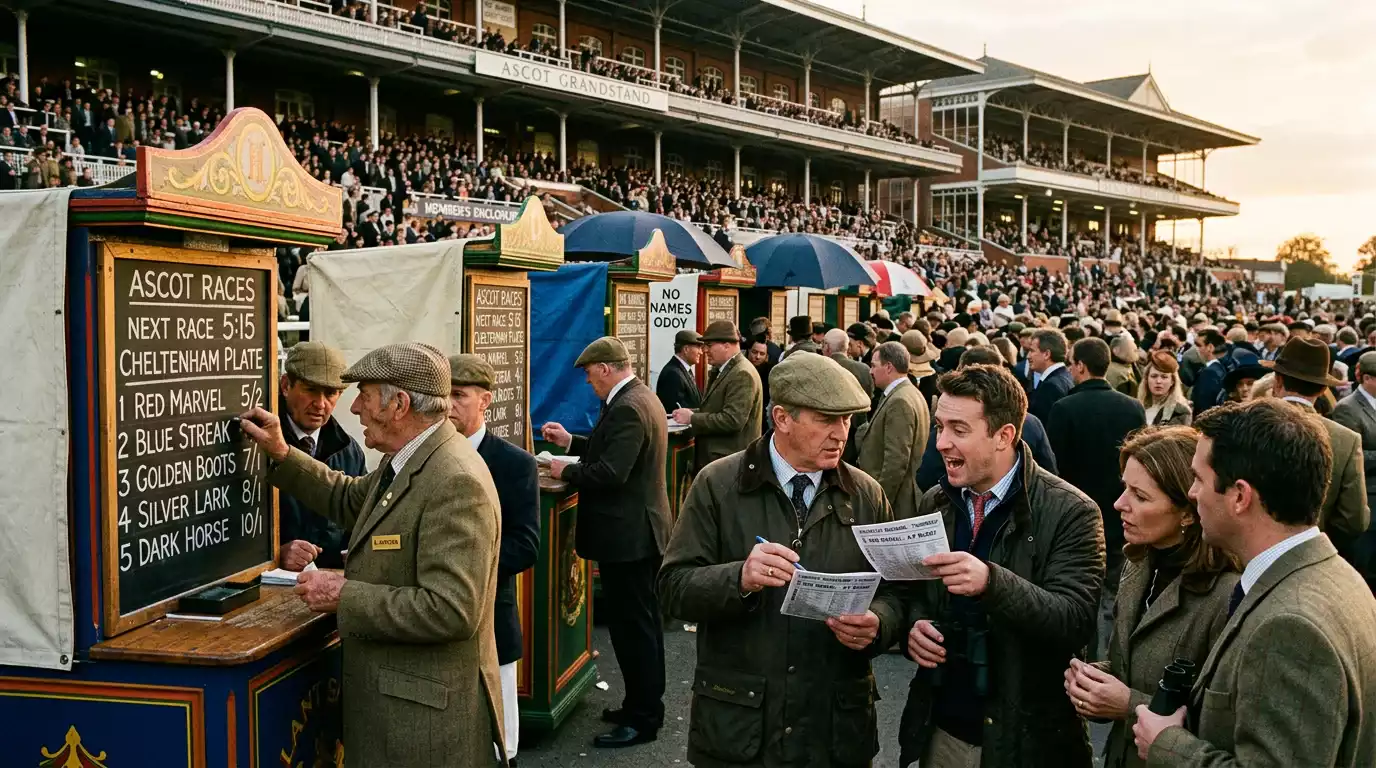
More levy money coming in while less money is wagered – that mathematical quirk cannot hold indefinitely. The tension Delmonte describes matters for place bettors because industry health determines what products reach the market.
The UK sports betting market generates £16.8 billion in annual Gross Gambling Yield – the total amount retained by operators after paying out winning bets. Horse racing contributes roughly 5% of that figure, making it the second-largest betting vertical behind football.
Prize money in British racing hit a record £194.7 million in 2025, supported partly by levy contributions that your bets help fund. The connection between punting and the sport itself is not abstract – it is baked into the financial structure. Every place bet contributes to a levy system that supports breeding, welfare, and competition across all 59 licensed UK racecourses.
Racecourse attendance rebounded to 5.031 million in 2025, exceeding 5 million for the first time since 2019. That live presence translates to on-course betting activity, even as mobile wagering dominates overall volume. The sport retains cultural pull that sustains betting interest – but the composition of that interest is shifting toward fewer, larger events rather than distributed engagement across the calendar.
BHA modelling projects runner numbers will decline 6-7% by 2027. Fewer horses in training means potentially smaller fields, which directly impacts place betting opportunities. A sport with consistently thin fields offers less scope for the kind of multi-place payouts that make place betting attractive. The health of British racing and the viability of place betting strategy are more connected than most punters realise.
Responsible Place Betting
Nine years in this industry have shown me enough cautionary tales to fill a book. Place betting feels lower-risk than win betting because the odds of success are higher – but that perception can seduce punters into staking more than they should, more often than they planned, chasing a placed finish that feels perpetually within reach.
Set a bankroll limit before any betting session and treat it as non-negotiable. When that money is gone, walk away. No place bet, regardless of how certain it feels, justifies chasing losses or exceeding your predetermined spend. The mathematics of betting mean that even skilled punters experience losing runs – the goal is surviving those runs with your bankroll and wellbeing intact.
Stake sizing matters as much as selection quality. Professional bettors typically risk 1–3% of their bankroll on any single wager. If you have £500 set aside for betting, that means £5–15 per place bet – not £50 because you "really fancy" a horse. Consistency in stake sizing prevents a few bad days from destroying months of careful accumulation.
Time limits serve as a second boundary. Decide in advance how long you will spend assessing races and making selections. The availability of racing content through apps and streaming makes it easy to drift from casual interest into constant engagement. An hour studying the day's cards before committing your bets differs fundamentally from scrolling through odds at random moments hoping something catches your eye.
If betting stops feeling like entertainment and starts feeling like obligation, that shift signals a problem worth addressing. GambleAware and the National Gambling Helpline provide confidential support for anyone who feels their betting has moved beyond their control. Asking for help is not weakness – it is the most clear-headed decision a struggling bettor can make.
Place Betting FAQ
What is a place bet in horse racing?
A place bet is a wager that pays out if your selected horse finishes in one of the designated paying positions, typically first, second, or third depending on field size. You do not need to pick the winner – any finish in the places counts as a winning bet. The odds paid are a fraction of the full win odds, usually 1/4 or 1/5 depending on how many runners compete.
How many places are paid in a horse race?
The number of places depends on the number of runners. Races with 5-7 runners pay two places at 1/4 odds. Races with 8-15 runners pay three places at 1/5 odds. Handicap races with 16 or more runners pay four places at 1/5 odds. Races with four or fewer runners do not offer place betting at all. These are standard terms across UK bookmakers, though promotional offers sometimes extend the places paid.
What is the difference between each-way and place bet?
An each-way bet combines a win bet and a place bet into a single wager at double the stake. A £10 each-way bet costs £20 total, with £10 on the horse to win and £10 on it to place. A place-only bet puts your entire stake on the horse finishing in the places without funding any win element. Each-way gives you two chances to profit; place-only concentrates your stake where you believe the value lies.
How are place bet odds calculated?
Place odds are derived by dividing the win odds by the applicable fraction. In a 5-7 runner race with 1/4 terms, an 8/1 shot becomes 2/1 for the place (8 divided by 4). In an 8+ runner race with 1/5 terms, a 10/1 shot becomes 2/1 for the place (10 divided by 5). Multiply your stake by these place odds, then add your stake back to calculate total returns.
What happens to my place bet if a horse is withdrawn?
If a horse is withdrawn before the race, Rule 4 deductions may apply to your returns based on the price of the withdrawn horse. More significantly, withdrawals can change the number of runners and shift the place terms. A race that qualified for three places might drop to two places if enough horses withdraw. Always verify the final field size and applicable terms before the off, as your bet settles according to conditions at race time, not when you placed it.
Can I bet place only without the win part?
Traditional bookmakers do not typically offer place-only betting as a standalone product – they bundle it into each-way wagers. To bet place only, use the Tote Place pool or betting exchanges. The Tote offers pool betting where your returns depend on the dividend. Exchanges let you back horses in dedicated place markets at odds set by other users, with no win element attached.
Are place bets good for beginners?
Place bets suit beginners because they offer more routes to a return than win bets. Your horse only needs to finish in the places, not beat every other runner. This reduces the variance beginners experience and provides more frequent feedback on selection quality. However, place betting still requires understanding of terms, fractions, and field sizes. Starting with each-way bets on well-fancied horses in competitive handicaps offers a reasonable entry point before progressing to more sophisticated place betting approaches.
Your Edge Starts with Understanding the Fundamentals
Place betting is not complicated, but it is widely misunderstood. The mechanics we have covered – field-size thresholds, place fractions, calculation methods, each-way comparisons – form the foundation that separates informed punters from those who tick boxes without knowing what they have backed. That foundation is now yours.
The UK racing calendar offers thousands of opportunities to apply this knowledge. Major festivals deliver large-field handicaps with four paying positions and enhanced promotional terms. Midweek cards present smaller puzzles requiring careful assessment of field size and competitive depth. Each race poses the same core question: does the place bet represent value given the conditions in front of you?
Return to specific sections as you encounter real betting situations. Run the numbers before committing stake. Check the declared runners before assuming which terms apply. Build a systematic approach that matches bet type to race profile rather than defaulting to the same structure regardless of circumstance.
The horse racing market rewards those who engage with its mechanics rather than hoping for luck. Place betting, approached with the discipline and understanding this guide provides, offers a path to consistent engagement where near-misses translate into returns rather than regrets. That is the edge – and it is yours to take.
Articles
Written by the editors at placebethorseracinguk.com.
