

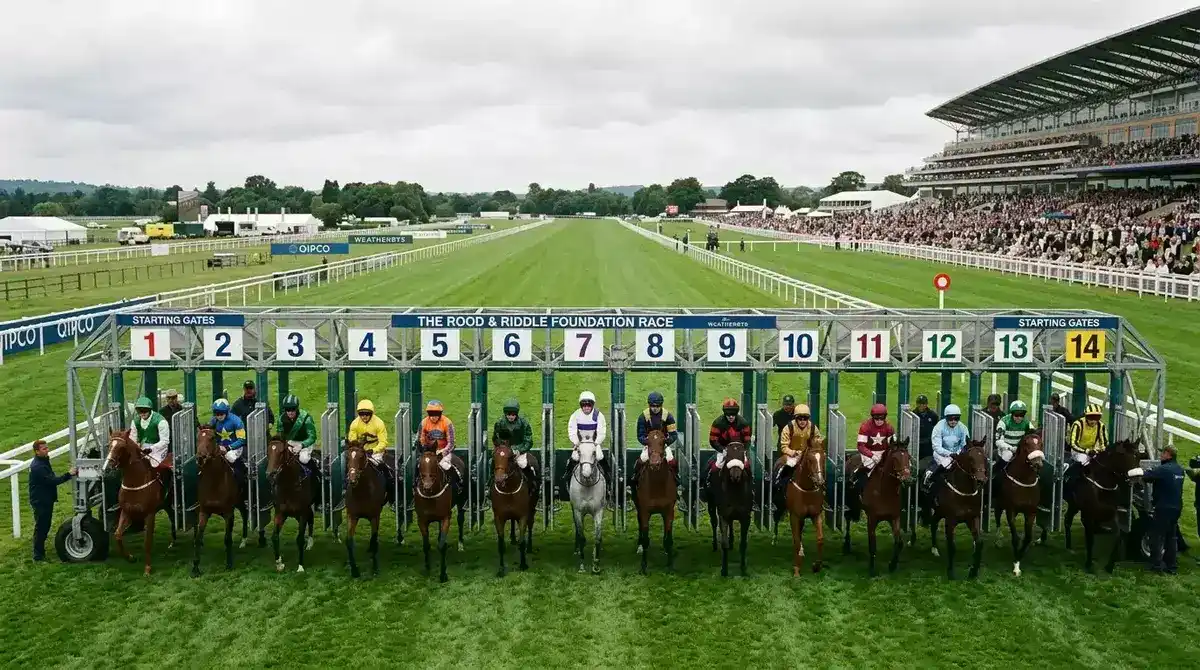
I learned about place terms the hard way. Backing a 16/1 shot each-way in what I thought was an eight-runner race, I discovered post-race that a late withdrawal had dropped the field to seven. Instead of three places at 1/5 odds, I had two places at 1/4 odds — my horse finished third, outside the paying positions, and I collected nothing. That experience taught me to check place terms by number of runners before every single bet.
The rules governing how many places are paid in UK horse racing are straightforward once you learn them, but almost 28% of races between April and May 2025 had six or fewer runners — the second-highest proportion in twenty years. This trend affects place betting opportunities directly. Fewer runners means fewer paying positions, which means understanding field size thresholds matters more than ever.
This reference guide covers every scenario you will encounter in UK racing. From small-field conditions races to massive Grand National fields, from standard bookmaker terms to promotional enhancements, you will find the information needed to know exactly what you are betting into. No more surprises at the payout window.
Standard UK Place Terms: The Complete Table
Before examining each category in detail, here is the complete reference for standard UK bookmaker place terms. Commit this to memory, or bookmark this page — you will need it.
Races with 2 to 4 runners: No place betting available. Only win bets are offered. The field is considered too small for meaningful place markets, and each-way bets are typically void or refunded at most bookmakers.
Races with 5 to 7 runners: Two places are paid at 1/4 the win odds. First and second collect on place bets. This applies regardless of race type — handicaps, conditions races, maidens, and all other classifications follow the same rule within this field size range.
Races with 8 to 15 runners (non-handicaps): Three places are paid at 1/5 the win odds. First, second, and third collect on place bets. The fraction reduction from 1/4 to 1/5 partially compensates for the additional paying position.
Races with 8 to 15 runners (handicaps): Three places are paid at 1/5 the win odds. The terms match non-handicap races in this field size bracket.
Handicap races with 16 or more runners: Four places are paid at 1/5 the win odds. This is the most generous standard terms available, reserved exclusively for large-field handicaps. First, second, third, and fourth all collect on place bets.
Non-handicap races with 16 or more runners: Three places are paid at 1/5 the win odds. Importantly, the four-place extension only applies to handicaps. Large-field maidens, conditions races, and classified stakes retain three-place terms regardless of how many runners line up.
These standard terms apply across all major UK bookmakers during normal racing. Variations occur through promotional offers, which I will address later, but the baseline remains consistent. Whether you bet online, on the phone, or in a shop, these are the terms you will encounter unless specifically told otherwise.
The structure creates clear thresholds: 5 runners activates place betting, 8 runners expands to three places, 16 runners in handicaps extends to four places. Each threshold changes your potential returns meaningfully, which is why monitoring final declarations matters.
5-7 Runners: Two Places at 1/4 Odds
Small fields create an interesting dynamic for place bettors. Yes, the 1/4 fraction is more generous than the 1/5 you receive in larger races. But only two positions pay out, which concentrates the competition significantly.
The average field size in Jump racing stands at 7.84 runners per race. This figure sits right on the boundary between place terms categories. Many National Hunt races, particularly novice events and small-field chases, fall into the 5-7 runner bracket where these terms apply.
At 1/4 odds, a 12/1 shot pays 3/1 for a place. That is attractive on paper. The challenge is that your horse must finish first or second — no margin for a solid third. In a seven-runner race, roughly 29% of the field collects place money. In a five-runner race, that figure rises to 40%. The maths suggests small fields should favour place bettors, but the reduced number of paying positions often outweighs the percentage advantage.
I approach 5-7 runner races differently than larger fields. The focus shifts from “will this horse place” to “can this horse finish in the first two.” That subtle reframing matters. A horse with a 35% chance of placing in a 12-runner race might have only a 20% chance of finishing top two in a 6-runner race against the same quality opposition.
Value in this bracket tends to emerge on second-favourites rather than outsiders. When a strong favourite dominates a small field, the place-only returns on backing that favourite offer poor value — you are paying short odds for a high-probability outcome but with no upside. The second-favourite, however, often faces less pressure and can represent genuine value at 1/4 place odds if you assess its chances accurately.
Certain race types cluster in this field size range. Mares’ novice hurdles, small-field chases at minor tracks, and summer Flat races often attract limited entries. Recognising when field size is likely to be small helps you target appropriate bets before declarations are even made.
8-15 Runners: Three Places at 1/5 Odds
This is the sweet spot for place betting in UK racing. Three paying positions provide meaningful coverage, the 1/5 fraction delivers reasonable returns on longer-priced selections, and field sizes in this range occur more frequently than any other.
The average Flat racing field size of 8.90 runners places the typical turf race squarely in this category. When you bet on afternoon Flat cards during the summer months, expect three-place terms at 1/5 odds more often than not. The numbers confirm this is where most of your place betting activity will occur.
At 1/5 odds, a 10/1 shot pays 2/1 for a place. A 15/1 shot pays 3/1. A 20/1 shot pays 4/1. These returns make each-way betting on mid-priced selections genuinely attractive. The place portion carries its own value proposition independent of the win element.
The three-place structure changes your probability assessment. In a 12-runner race, 25% of the field collects place money. Your horse needs to beat nine rivals for a place rather than eleven for a win. That difference matters substantially when evaluating competitive handicaps where the form book offers multiple credible candidates.
I find the best value in 8-15 runner races comes from horses priced between 8/1 and 16/1 with consistent placing records. The 1/5 fraction at these prices delivers place odds between 1.6/1 and 3.2/1 — attractive returns if your strike rate supports them. Backing 6/1 or shorter reduces place returns to levels that rarely justify the stake unless your confidence is exceptionally high.
Handicap races in this field size range merit particular attention. The competitive nature of handicaps, where horses are theoretically equalised by weight, creates races where placing becomes more predictable than winning. A horse might not quite have the speed to win off its mark, but its consistency suggests it will be there or thereabouts at the finish. These profiles suit place betting perfectly.
Monitor the eight-runner threshold carefully. A race declared with nine runners can drop to seven with two withdrawals, shifting terms from three places at 1/5 to two places at 1/4. Betting early on races near this boundary carries risk that later bettors avoid.
16+ Runners: Four Places in Handicaps
The four-place bracket represents place betting at its most expansive. With a quarter of a large field collecting place money, and a full 25% of runners potentially finishing in paying positions in a 16-runner race, the dynamics shift considerably from smaller events.
This category applies exclusively to handicap races. The distinction matters because non-handicap races with 16 or more runners — though rare — retain standard three-place terms. Premier Flat fixtures average 11.02 runners, which falls short of this threshold in most cases. To access four-place terms consistently, target the big Saturday handicaps: the competitive cavalry charges that attract maximum entries.
The Grand National stands as the ultimate example. With 40 runners navigating four miles and 30 fences, the standard four-place terms expand further through promotional offers — some bookmakers pay six, seven, or even eight places on the National. But even under standard terms, backing a 50/1 shot each-way in a 40-runner handicap offers fundamentally different prospects than the same price in an eight-runner conditions race.
At 1/5 odds in this bracket, place returns follow familiar calculations: a 20/1 shot pays 4/1 for a place, a 25/1 shot pays 5/1, a 33/1 shot pays approximately 6.6/1. The combination of generous place odds and four paying positions makes big-field handicaps the natural home for each-way value seeking.
My approach to 16+ runner handicaps focuses on horses with proven ability to hit the frame without necessarily winning. The exposed handicapper who finishes second, third, or fourth repeatedly may struggle to win off its current mark, but its consistency makes it an ideal place betting vehicle. In a cavalry charge with 20 runners, you need your horse to beat 16 rivals for a place. A horse that routinely finishes in the first quarter of the field has demonstrable ability to achieve exactly that.
The competitive nature of big handicaps means form can be difficult to interpret. This is where specialisation pays dividends. Understanding track biases, draw advantages on certain courses, and how weights affect different running styles helps identify place candidates that casual bettors overlook.
Non-Handicap Races with Large Fields
Here is a rule that catches out even experienced punters: the four-place extension at 16+ runners applies only to handicaps. Large-field non-handicap races retain three places at 1/5 odds regardless of how many horses line up.
Why does this matter? Consider a big-field maiden at a Flat meeting. Twenty horses might contest a maiden at Newmarket during a busy afternoon card. First instinct suggests four places should be paid, following the 16+ runner logic. But maidens are not handicaps — no official rating determines the weight carried. The race pays three places only, same as an eight-runner event.
Conditions races face the same limitation. These events, which set specific entry criteria around rating bands or prize money won, can attract double-figure fields at major meetings. Again, three places only. The handicap requirement is non-negotiable for accessing four-place terms.
Novice events, classified stakes, listed races, and Group races all follow three-place terms regardless of field size. Even when 20+ runners contest a valuable conditions race at Royal Ascot, you are competing for three paying positions. The structure feels inconsistent if you do not understand the underlying logic.
The rationale relates to competitive balance. Handicaps theoretically equalise the field through weight adjustments, creating races where many horses have legitimate chances. Non-handicaps allow superior horses to dominate, concentrating winning chances among fewer contenders. The place terms structure reflects this expectation, though reality often proves messier than theory suggests.
For place bettors, this distinction affects strategy significantly. Large-field non-handicaps often feature a small group of likely contenders and a tail of no-hopers. Your placing chances concentrate around whether your selection beats the other credible horses, not the entire field. This differs from handicaps where 15 horses might have realistic place claims in a 20-runner event.
Always verify race type before assuming place terms. A quick check of the race conditions confirms whether you are betting a handicap or something else. The difference between three and four places can determine whether a bet offers value or not.
UK Field Size Trends and Place Betting Impact
The numbers tell a concerning story for place bettors. Horses in training in Britain numbered 21,728 in 2024, down 2.3% year-on-year. More significantly, BHA modelling predicts the number of runners will decline 6-7% between 2024 and 2027. Fewer horses means smaller fields, which means reduced place betting opportunities.
Anne Lambert, Interim Chair of the Horserace Betting Levy Board, put it bluntly: racing is facing significant challenges. Those challenges manifest directly in field sizes that affect your betting options. A sport built on competitive races needs enough horses to fill them, and the supply is contracting.
The trend shows in daily racing. Almost 28% of races during spring 2025 had six or fewer runners — the second-highest proportion in two decades. Small fields mean only two places paid at 1/4 odds, reduced each-way value, and fewer opportunities for the place betting strategies that work best in competitive events.
This trajectory varies by race type. Prestigious fixtures maintain strong field sizes: Premier Flat fixtures averaged 11.02 runners, Premier Jump fixtures averaged 9.41. But bread-and-butter racing at minor tracks suffers most. Monday afternoon cards at smaller courses increasingly feature thin fields where place betting holds limited appeal.
What does this mean practically? First, expect more races where place betting is unavailable or offers poor value. Second, the races that do attract full fields become more important to target. Third, promotional enhancements that extend place terms beyond standard offerings gain significance as compensation for reduced baseline opportunities.
I have adjusted my approach over recent seasons. Rather than betting across multiple small meetings, I concentrate activity on cards with competitive fields. Saturday afternoons, televised fixtures, and festival racing now receive more attention. The returns per hour of analysis are simply better when fields are large enough to make place betting worthwhile.
The industry is responding with initiatives to boost field sizes, but demographic and economic factors work against easy solutions. For place bettors, the practical response is selective focus: find the races that suit your strategy rather than forcing bets into unsuitable conditions.
How Bookmaker Place Terms Can Vary
Standard terms provide the baseline, but bookmakers frequently deviate through promotional offers. Understanding these variations helps you capture value that standard terms would not provide.
Extra place offers are the most common enhancement. Instead of three places in an 8-15 runner race, a bookmaker might pay four or five places on selected events. These promotions typically target televised races, festival action, or specific high-profile meetings. The extra positions materially improve each-way value without changing the fraction — you still receive 1/5 odds, but more horses qualify for place payouts.
Enhanced fractions occasionally appear. Instead of 1/5 odds on place terms, a promotion might offer 1/4 odds in larger fields. This directly increases your place returns while keeping the same number of paying positions. These offers are rarer than extra places but deliver substantial value when they appear.
Best Odds Guaranteed interacts with place terms in important ways. If you take an early price and the starting price drifts higher, BOG pays you at the better odds for both win and place portions of an each-way bet. This effectively improves your place odds without requiring any promotional terms. At the Cheltenham Festival 2026, one major operator paid over £50 million in BOG enhancements — evidence of how significantly prices can move between early betting and the off.
Always read promotional terms and conditions. Some offers exclude certain races, impose maximum stake limits, or apply only to online bets. An extra place promotion that caps stakes at £25 limits your potential advantage if you normally bet larger amounts. A promotion that excludes ante-post bets catches out early investors who assumed coverage applied.
Comparing terms across bookmakers before major events has become standard practice in my routine. One operator might offer six places on the Grand National while another offers eight. One might apply 1/4 odds on festival handicaps while another sticks with 1/5. These differences compound across a festival of betting and can determine whether your overall approach generates profit or loss.
The promotional landscape changes constantly. Sign up for notifications from bookmakers you use regularly, monitor racing forums for user-reported offers, and check the terms on race day rather than assuming last week’s promotions still apply. Vigilance in this area delivers genuine edge.
Place Terms FAQ
Using Place Terms to Your Advantage
Knowledge of place terms transforms from academic understanding to practical edge when you apply it consistently. Every betting decision should incorporate an assessment of whether the applicable terms suit your selection and strategy.
The thresholds are simple: 5 runners activates place betting, 8 runners expands to three places with reduced fractions, 16 runners in handicaps extends to four places. Memorise these, verify them before betting, and adjust your approach accordingly.
Field size trends suggest selectivity will become increasingly important. Target the races that offer competitive fields and favourable terms rather than forcing bets into thin events where place betting holds limited value. Quality over quantity applies to race selection just as it does to horse selection.
For detailed guidance on calculating your returns under different place terms, the calculator guide walks through every scenario with worked examples. The terms determine what fraction applies; the calculator shows exactly what you will collect. Together, they give you complete control over your place betting decisions.
Check before every bet. Verify field size, confirm race type, and note any promotional enhancements. The extra thirty seconds this requires has saved me from costly mistakes repeatedly. Make it automatic, and place terms become an advantage rather than a complication.
Articles
Written by the editors at placebethorseracinguk.com.
