

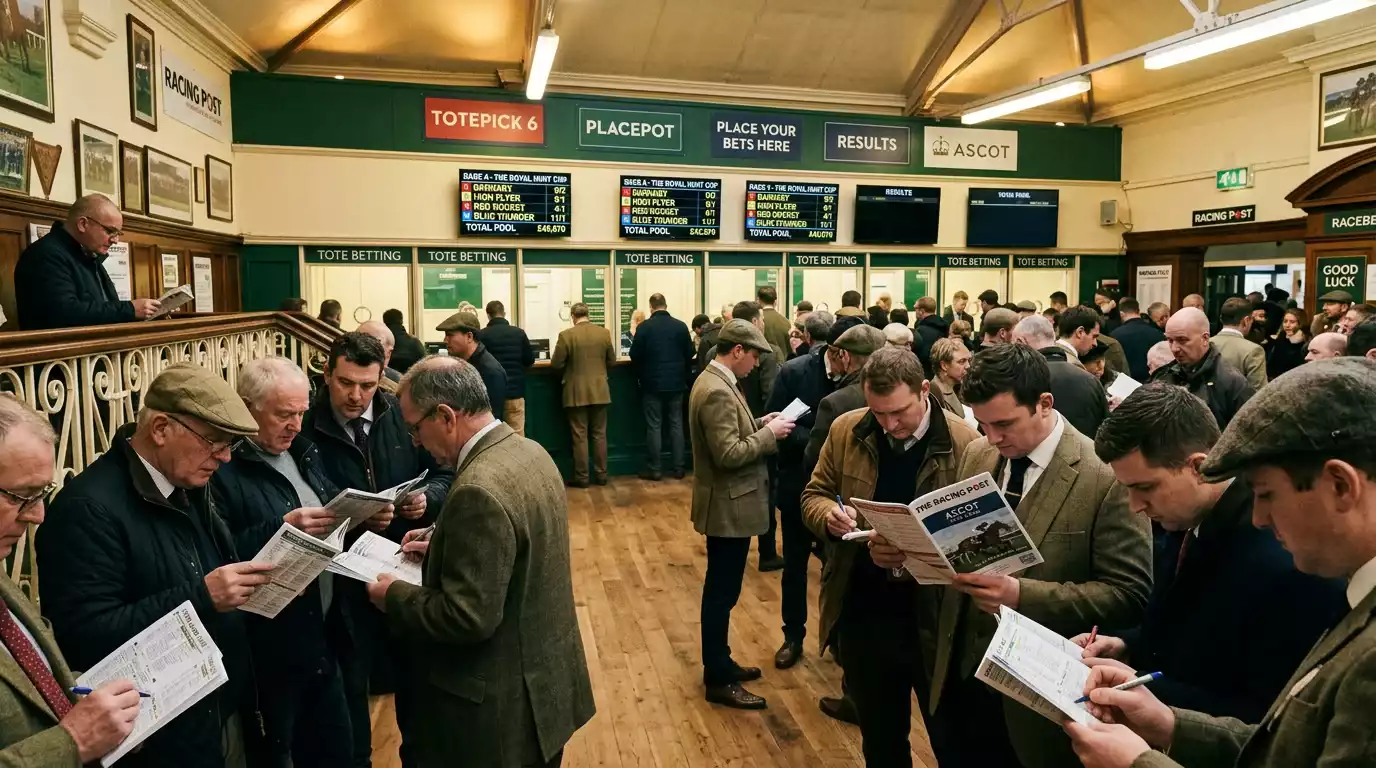
My introduction to Tote place betting came through frustration with bookmaker odds that seemed compressed whenever I wanted to back outsiders. A friend mentioned the pool might pay better on longshots – and that single observation redirected years of my place betting approach.
The Tote operates on fundamentally different principles to traditional bookmakers. Rather than fixed odds determined by a trader, the Tote pools all place bets together, deducts its take, and divides the remainder among winning tickets. This pari-mutuel system creates dividends that fluctuate based entirely on where the betting public puts its money – and therein lies both the opportunity and the complexity.
UK horse racing betting generated £766.7 million in Gross Gambling Yield through remote channels alone in the 2024-25 financial year. The Tote captures a fraction of that market, but its pool dynamics create specific situations where place bettors find value unavailable elsewhere. Understanding when those situations arise separates opportunistic use from habitual use – and only the former makes sense.
How Tote Place Betting Works
The mechanics begin with the place pool – a pot of money built from all place bets on a given race. The Tote deducts approximately 26% from this pool (exact percentages vary slightly), then divides the remainder among holders of winning tickets.
Here’s where it differs from bookmakers: your return depends not just on whether your horse places, but on how many other people backed the same horses to place. Back a heavily-supported favourite? Your dividend will be small because you’re sharing the pool with thousands of others. Back an unconsidered outsider that hits the frame? Fewer tickets to share the spoils means a larger dividend per unit staked.
The place pool typically pays on the same number of positions as standard bookmaker terms – two places for fields of five to seven, three places for eight or more runners. Unlike bookmaker enhanced place promotions, the Tote doesn’t extend to four, five, or six places regardless of field size or special offers. This is simply how the pool operates.
Dividend calculations happen after the race, which means you’re betting blind on exact returns. The estimated dividend displayed before the off provides guidance, but final figures depend on late betting patterns – particularly large bets placed in the final minutes before the start. I’ve seen estimated dividends shift dramatically between the “betting shows” and actual declaration.
One mechanical point that matters: Tote place bets are standalone – you can’t combine them into accumulators in the traditional sense, though Tote Placepot and similar products offer multi-race pool options with different structures entirely.
Tote vs Bookmaker Place Betting
The comparison depends entirely on circumstance. Neither option is universally superior; each has specific scenarios where it delivers better value.
Bookmakers offer certainty. When you place an each-way bet at 20/1, you know your place return will be 4/1 or 5/1 depending on the terms – that figure is locked. The Tote offers variability. Your place bet on the same horse might return more or less than the bookmaker equivalent depending on pool dynamics.
Short-priced horses almost always pay worse on the Tote place pool than with bookmakers. The public’s tendency to over-back favourites concentrates pool money on obvious selections, driving down dividends. When a 6/4 favourite finishes in the places, Tote dividends frequently return less than even money – worse than the 1/4 or 1/5 fraction of odds you’d receive from traditional each-way betting.
Longshots present the opposite picture. An unconsidered 40/1 shot that sneaks into the frame often generates Tote place dividends exceeding the 8/1 or 10/1 you’d receive from bookmakers. The pool isn’t weighed down with money on that horse, so those who did back it share a larger slice. This is where Tote place betting genuinely shines.
Middle-market horses – the 8/1 to 14/1 range – are unpredictable. Sometimes Tote dividends beat bookmakers, sometimes they fall short. There’s no systematic edge either way; it depends on the specific race’s betting patterns and public behaviour.
I use a simple decision framework: if I’m backing odds-on or short-priced selections, bookmaker place terms are almost certainly better. If I’m taking a genuine longshot each-way, comparing estimated Tote dividends against bookmaker prices is worth the effort. The middle ground merits case-by-case assessment.
When Tote Place Offers Value
Certain race types consistently favour Tote place betting. Large-field handicaps where public attention fixates on a few fancied runners leave value scattered across the unconsidered portion of the market. The betting public’s herding behaviour creates pools weighted towards popular selections, inflating dividends on ignored runners.
Low-profile meetings amplify this effect. When a Tuesday afternoon card at a minor track draws limited interest, pool sizes shrink – but so does the sophistication of the betting. Casual punters back names they recognise, leaving value on horses whose form merits attention but whose profiles don’t attract public money.
Competitive races with no standout favourite spread bookmaker attention across multiple horses, often leading to compressed each-way prices. The Tote pool might not be similarly compressed if public betting patterns differ from bookmaker money – and they frequently do. Checking estimated dividends against bookmaker places odds takes seconds and occasionally reveals significant discrepancies.
Specific horse profiles suit Tote place betting particularly well. Consistent placers that rarely win but frequently frame – the type that triggers sighs from backers wanting the win – often trade at short prices with bookmakers (who know they’ll likely have to pay out the place portion) but longer estimated dividends on the Tote (where casual punters ignore them for more exciting options).
Late money shifts can work for or against Tote bettors. If you identify an unconsidered horse and the estimated dividend looks generous, significant late support for that horse will dilute your return. Conversely, late money flooding onto other runners improves your position. This unpredictability is both the appeal and the risk of pool betting.
FAQ
Integrating Tote Place Bets Into Your Strategy
After years of comparing outcomes, I’ve settled on treating the Tote as a specialist tool rather than a default option. It earns consideration when backing outsiders in competitive races, when bookmaker place prices look unusually tight, and when estimated dividends suggest genuine edge over fixed-odds alternatives.
The discipline lies in checking rather than assuming. Estimated dividends are visible before every race – comparing them to bookmaker each-way terms takes moments and occasionally identifies significant value gaps. Those gaps are where Tote place betting earns its place in a considered betting approach.
For the underlying principles of place betting mathematics that apply whether you’re using bookmakers or pools, our guide to place bet odds calculation covers the essential formulas and reasoning.
Articles
Written by the editors at placebethorseracinguk.com.
