

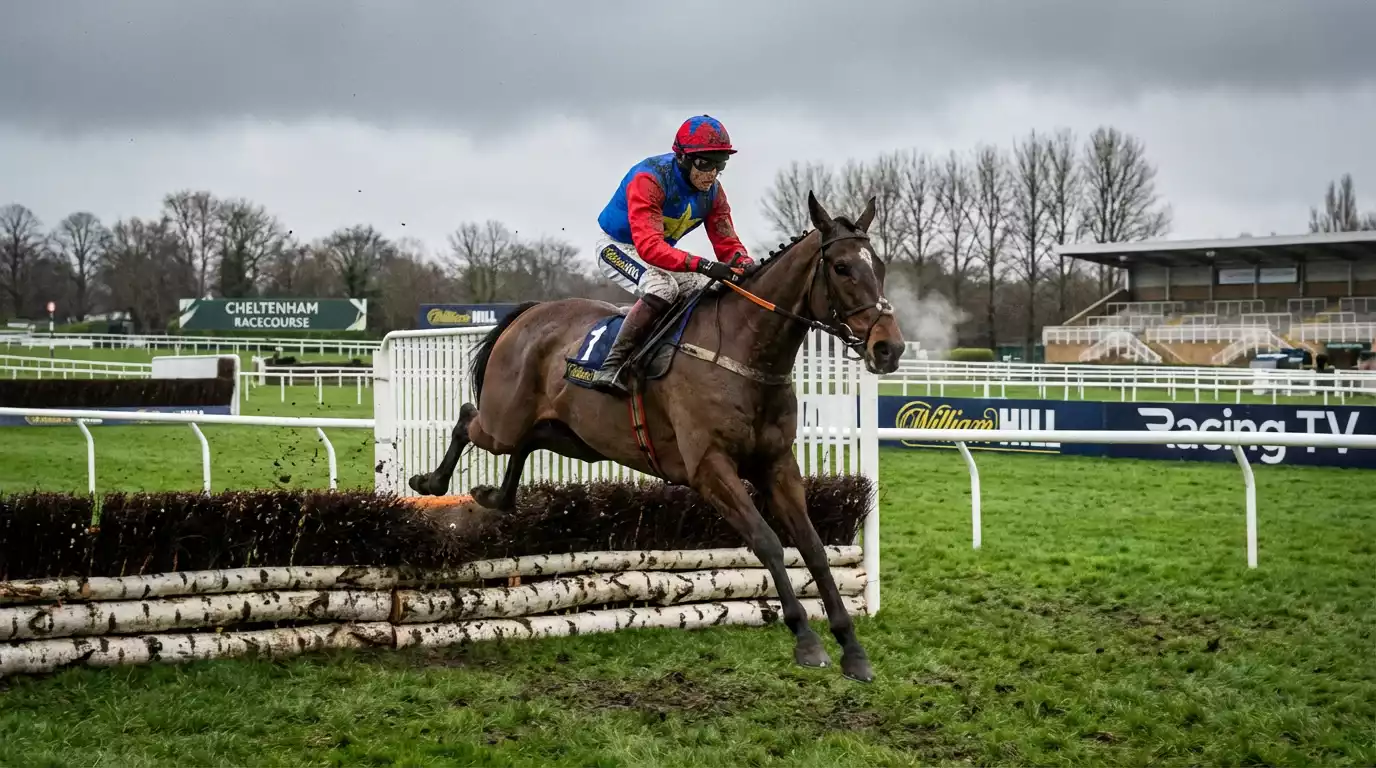
The thunder of hooves over birch, the collective intake of breath as the field approaches Becher’s, the drama of tired horses battling up the hill at Cheltenham – Jump racing delivers spectacle that Flat racing’s precision simply cannot match. For place bettors, National Hunt’s distinctive character creates both unique opportunities and specific challenges worth understanding.
Average Jump racing field size sits at 7.84 runners per race, noticeably lower than Flat racing’s 8.90. That difference directly affects place betting: fewer runners mean less frequent qualification for three-place terms, more races with two-place payouts, and generally tighter frames for place returns. Understanding how obstacles, attrition, and National Hunt’s rhythms shape place betting opportunities separates informed punters from those who apply Flat-centric thinking to a different code.
Premier Jump fixtures buck the average – Cheltenham Festival races regularly exceed the runners needed for enhanced place terms. But typical midwinter cards at smaller tracks often feature thin fields where place betting requires adjusted approaches.
The rhythm of the National Hunt season differs from Flat racing’s summer focus. Understanding when and where to concentrate your Jump racing place betting activity maximises exposure to favourable conditions while minimising engagement with unfavourable ones.
Jump Racing Field Sizes
The 7.84-runner average masks significant variation by race type. Novice hurdles and beginners’ chases often attract modest entries as trainers protect lightly-raced horses from excessive competition. Handicap hurdles and chases draw larger fields, particularly at the bigger meetings.
Premier Jump fixtures averaged 9.41 runners in recent seasons – a figure that triggers three-place terms consistently and occasionally reaches the sixteen-runner threshold for four places in competitive handicaps. These meetings merit prioritisation for place betting activity.
The Cheltenham Festival represents the pinnacle, with most races attracting maximum fields and enhanced promotional terms from bookmakers. Festival handicaps frequently see 20+ runners, creating place betting environments comparable to the best Flat opportunities. Building your Jump season place betting around the Spring festivals makes strategic sense.
Obstacles create attrition that affects place calculations differently than Flat racing. Falls, refusals, and unseated riders remove horses from contention regardless of their underlying ability. This attrition increases finishing probability for survivors – a factor that standard place odds may not fully incorporate. Horses with reliable jumping records gain place value beyond their win probability.
Ground conditions influence Jump racing more dramatically than Flat. Heavy ground exhausts fields, causing late fallers and dramatically altering finish orders. Quicker conditions favour certain running styles over others. These going-dependent dynamics create place betting angles when conditions change from expectations.
Chases Versus Hurdles
The distinction between chasing and hurdling affects place betting in ways worth noting. Chase obstacles are larger and more demanding – falls occur more frequently, attrition rates are higher, and the premium on jumping ability increases.
HBLB data shows that equine stars resonate with racing fans – horses like Constitution Hill and Galopin Des Champs become household names through the Jump code’s championship structure. These headline performers often dominate their races, creating market profiles where one horse commands overwhelming favouritism while challengers compete for minor honours.
When a dominant champion heads a chase field, place betting on second-favourite types gains appeal. The champion’s win probability might be 70%+, but it also accounts for one of two or three place positions. Remaining places become contests among more evenly-matched challengers where value can emerge.
Hurdle racing tends toward more competitive fields with less stark class differentials. The smaller obstacles reduce attrition rates, meaning more horses complete the course and contest the frame. This increased competition can either create or destroy place value depending on how bookmakers price the resulting probability distributions.
Novice events versus open company present different place betting profiles. Novices offer exposure to potentially progressive types but carry higher uncertainty. Open handicaps attract more form to analyse but feature tighter markets. Your analytical strengths should guide which race types you prioritise.
Mares-only races represent a growing sector of Jump racing with their own place betting characteristics. These contests often feature smaller fields and less competitive depth, but enhanced prize money attracts quality entries to the best fixtures. Understanding the mares’ programme helps identify where place value exists in this expanding division.
The Jump Racing Calendar
The National Hunt season traditionally runs from autumn through spring, with peak activity November through April. Understanding the calendar helps you concentrate place betting during the most favourable periods.
Early season (October-November) sees the code’s return from summer. Horses are fresh, form lines are developing, and pricing uncertainty creates opportunity. The early-season major meetings – Cheltenham’s October fixture, the Paddy Power Gold Cup – attract strong fields worth targeting.
Deep winter (December-February) brings the Christmas festivals at Kempton, Leopardstown, and elsewhere. King George day, the Dublin Racing Festival, the Betfair Chase – these meetings feature enhanced terms and competitive fields. Weather disruptions become more frequent, requiring flexibility in your betting schedule.
Championship season (March-April) culminates in the Cheltenham Festival and Aintree’s Grand National meeting. These represent the absolute peak for Jump racing place betting – maximum fields, maximum promotions, maximum opportunity. Annual leave around these dates pays for itself through enhanced betting access.
Late season (April-May) winds down with Punchestown and the season’s final British meetings. Field sizes decline as horses head for summer breaks, but competitive racing continues for those still engaged. Sandown’s season finale traditionally attracts good-quality fields.
Summer jumping exists but offers limited place betting appeal. Small fields at minor meetings provide few opportunities for the place betting approaches that work during the core season. Most serious Jump place bettors reduce activity significantly during summer months, preserving capital and attention for the main campaign.
FAQ
Making Jump Racing Place Betting Work
Jump racing rewards those who understand its distinctive character. The attrition factor, the ground dependence, the championship structure, the seasonal rhythms – all shape place betting in ways that differ from Flat racing approaches.
Focus your activity on the major festivals where field sizes and promotional terms align favourably. Develop expertise in evaluating jumping reliability as a place-specific factor. Build going-dependent form assessments that capture how conditions affect frame-finishing probability.
The statistical realities of Jump racing – smaller average fields, higher attrition, greater ground sensitivity – create a distinct place betting environment. Embrace these differences rather than fighting them, and let your approach reflect Jump racing’s particular character rather than generic strategies better suited to larger Flat fields.
For the strategic principles that apply across both codes, see our comprehensive place betting strategy guide.
Articles
Published by the placebethorseracinguk.com team.
