

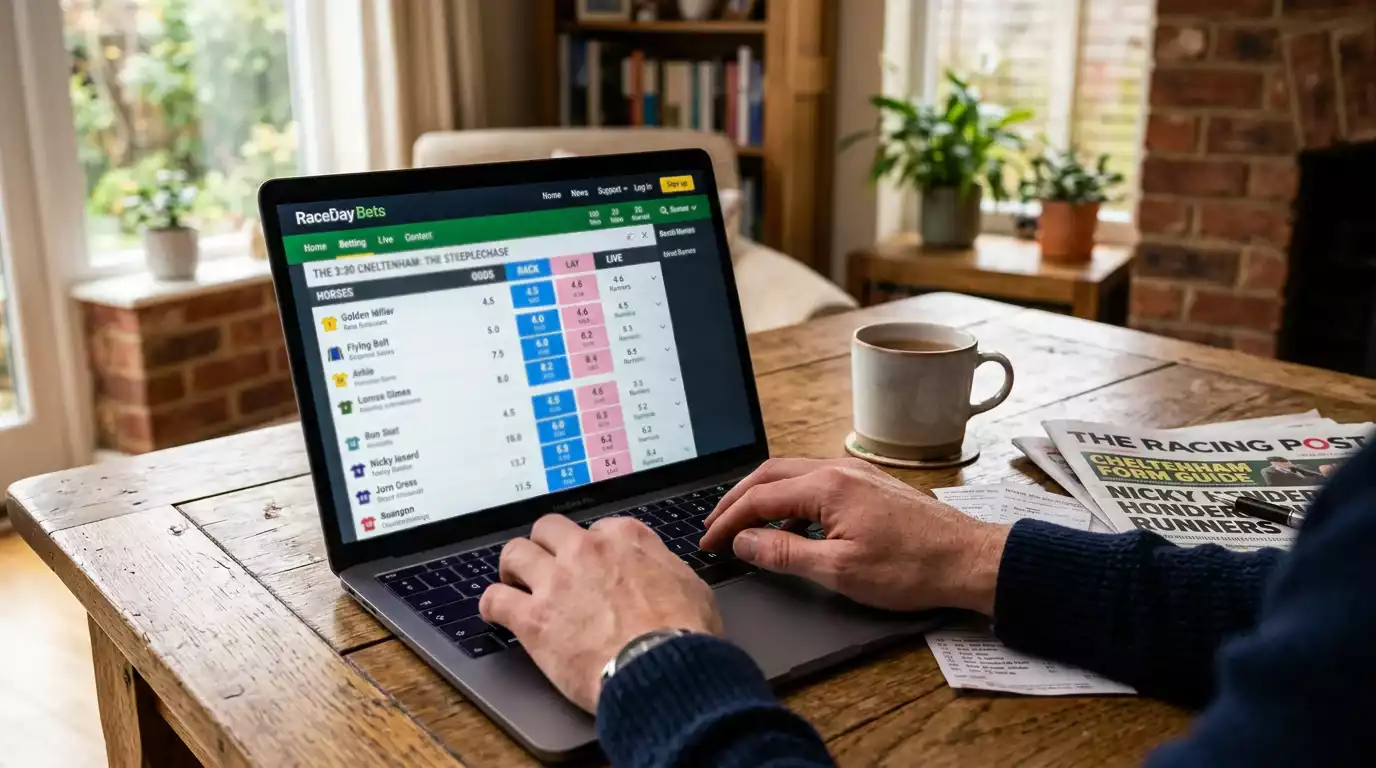
The first time I placed a lay bet in a place market, I felt like I’d discovered a secret door in a familiar building. Years of bookmaker-only betting had never presented the option of betting against a horse finishing in the places – suddenly, place betting became a two-way street.
Betting exchanges transformed racing markets when they emerged, but their place-only functionality remains underutilised by most punters. While the win markets attract the heaviest traffic, dedicated place markets offer something bookmakers simply cannot: the ability to back a horse solely to finish in the places, or to lay that same proposition. This flexibility opens strategic possibilities that traditional each-way betting cannot match.
Former Jockey Club Chief Executive Nevin Truesdale once observed that the Gambling Commission seems focused on small-stakes gamblers, questioning whether that approach makes sense for the industry. Exchange place markets offer an alternative environment where stake sizes are negotiated between bettors rather than imposed by operators – and where the mathematics of place betting operate differently.
Exchange Place Market Mechanics
Unlike bookmaker each-way bets where your place stake is automatically paired with a win stake, exchange place markets operate independently. You can back a horse to place without any win component – pure place betting at odds determined by market participants rather than bookmaker traders.
The place market odds reflect genuine market opinion on frame-finishing probability. When you see 2.5 available to back on a place market, that represents a roughly 40% implied probability that the horse finishes in the places. These prices often differ significantly from the place portion of bookmaker each-way odds, creating opportunities when the two disagree.
Exchange place markets typically pay on the same number of positions as standard terms – three places for fields of eight or more runners. However, exchange operators determine their own market rules, and these can vary between platforms and even between race types. Checking the specific market rules before betting is essential – assumptions based on bookmaker terms can prove costly.
Liquidity remains the practical constraint. Win markets attract the vast majority of exchange betting volume, leaving place markets relatively illiquid, particularly in low-profile races. You’ll find decent liquidity on feature races and competitive handicaps, but asking prices in smaller events might not represent meaningful sums. The depth of money available at your desired price matters more than the displayed odds.
Commission structures affect net returns. Major exchanges charge between 2% and 5% on winning bets, which reduces effective odds compared to gross prices displayed. A 3.0 price becomes approximately 2.9 net of 5% commission – factor this into any value assessment against bookmaker alternatives.
Backing to Place on Exchanges
Pure place backing suits specific scenarios better than traditional each-way betting. When you believe a horse has a strong chance of hitting the frame but minimal winning chance, exchange place markets let you concentrate your stake precisely where you see value – without paying for a win bet you don’t want.
Consider a consistent placer priced at 16/1 with a bookmaker. Each-way terms might give you 3/1 for the place at 1/5 odds. But what if the exchange place market offers 4.5 (effectively 3.5/1)? Backing exclusively in the place market delivers better returns if your assessment is that the horse places but doesn’t win.
The mathematics favour exchange place backing when your confidence in a frame finish substantially exceeds your confidence in winning. Each-way betting ties these two outcomes together; exchange markets separate them. That separation lets you stake with precision rather than accepting bundled propositions.
Timing considerations differ from bookmaker betting. Exchange place markets often move significantly in the final hour before a race as information crystallises and sharp money arrives. Early movers can find value, but they also risk price improvement for later bettors. I tend to watch place market dynamics rather than betting immediately, looking for price levels that offer genuine edge over bookmaker alternatives.
Handicap races with large fields create the most interesting exchange place opportunities. With more horses competing for places, the place market becomes more complex and potentially more mispriced than win markets. The analytical challenge of assessing place probability across a 20-runner field creates inefficiencies that attentive bettors can exploit.
Laying to Place on Exchanges
The ability to lay – to bet against a horse finishing in the places – represents the exchange’s unique contribution to place betting strategy. Bookmakers don’t offer this; only peer-to-peer markets allow you to take the other side.
Laying to place means you win if the horse finishes outside the places and lose if it frames. Your liability is calculated as the stake you’re accepting multiplied by the lay price minus one. Lay a horse at 3.0 for £10, and your liability is £20 – you’ll lose that if the horse places but collect the £10 stake if it doesn’t.
Strategic applications include opposing overbet horses whose place odds look too short. When public money pushes an inconsistent performer into low place prices, laying that inflated position becomes attractive. The horse might well miss the frame, but even if it does place, the tight odds mean limited downside relative to the price you’ve laid.
Laying to place also features in trading strategies – backing to place early when odds are generous, then laying at shorter prices as the market moves, locking in profit regardless of the race outcome. This approach requires both price movement and available liquidity, which limits its applicability to well-traded markets on feature races.
Risk management in place laying demands discipline. Unlike backing where your maximum loss equals your stake, laying creates open-ended liability proportional to the price. Laying at 10.0 means nine times your accepted stake in potential loss. The mathematics punishes careless position sizing brutally.
FAQ
Fitting Exchange Place Markets Into Your Betting
Exchange place betting suits bettors willing to engage with market dynamics rather than simply accepting offered prices. The additional complexity rewards those who understand when exchange prices beat bookmaker alternatives and when the liquidity constraints make traditional betting more practical.
I use exchange place markets selectively – targeting situations where pure place backing at exchange odds clearly exceeds each-way value, or where laying overbet horses offers negative expectancy for backers. The tool exists for specific purposes rather than as a default approach.
Understanding the strategic context for place betting decisions starts with our comprehensive place betting strategy guide, which covers when different approaches deliver genuine edge.
Articles
Published by the placebethorseracinguk.com team.
