

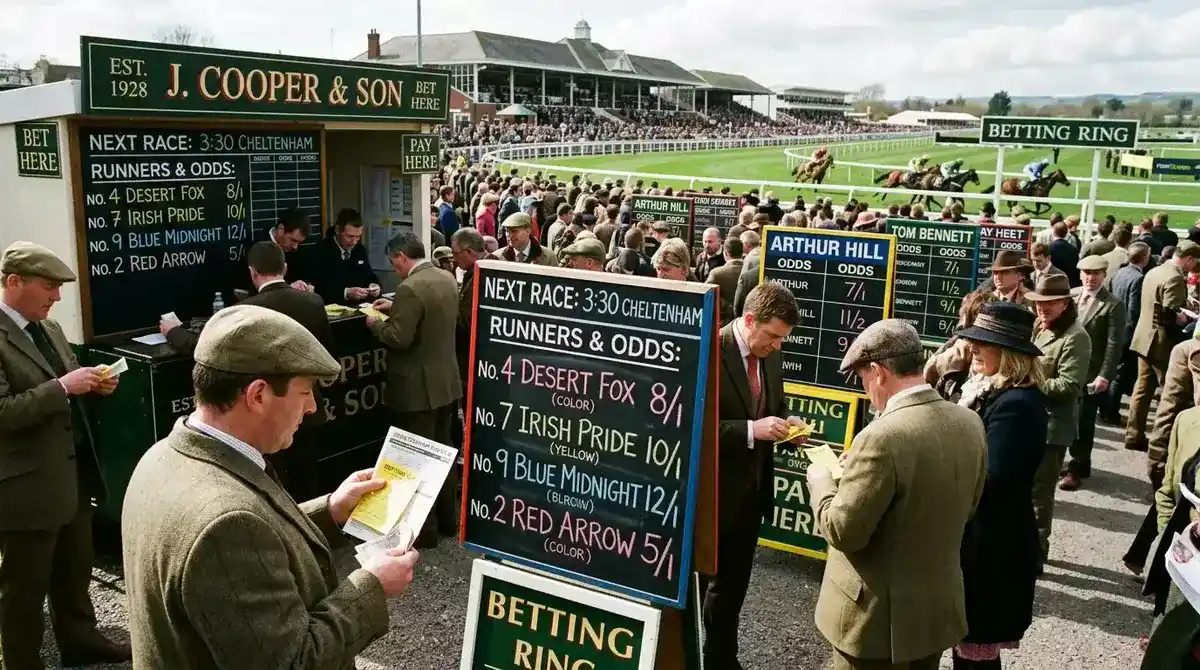
The numbers from Cheltenham Festival 2026 made me stop and recalculate. One major operator paid out over £50 million in Best Odds Guaranteed enhancements alone across that single week of racing. Fifty million pounds — returned to punters who took early prices and watched those prices drift before the off. If you are not using best odds guaranteed horse racing offers strategically, you are leaving substantial value on the table.
BOG fundamentally changes the early-price betting calculation. Traditional betting logic said taking an early price meant accepting risk that the price might shorten or lengthen before the race. With BOG, the risk becomes one-sided: you capture any price drift while the bookmaker protects you against shortening. Understanding how this mechanism works, which bets it covers, and when to deploy it transforms BOG from a nice-to-have into a genuine edge.
For place bettors specifically, BOG creates opportunities that go underappreciated. The enhancement applies to each-way bets, improving both win and place portions when prices drift. After nine years of analysing these markets, I have developed specific approaches that maximise BOG value for place-focused betting. This guide shares that methodology.
How Best Odds Guaranteed Works
I remember explaining BOG to a friend who thought it sounded too good to be true. The concept is straightforward once you understand the mechanism, but its implications run deep.
When you place a bet on a horse with BOG coverage, you lock in your price at the moment of betting. This becomes your minimum guaranteed return if your horse wins or places. However — and this is the crucial part — if the starting price (SP) exceeds your locked-in price, you receive the higher SP instead. You get the best of both worlds: early-price security combined with late-market upside.
Let me illustrate with a concrete example. You back a horse at 8/1 on the morning of the race. Throughout the day, money comes for other runners and your selection drifts to 12/1 by the off. With BOG, your winning bet pays at 12/1, not 8/1. The bookmaker absorbs the difference as the cost of offering this promotion.
The mechanics work automatically at most operators. You do not need to claim the enhancement or contact customer service. If the SP exceeds your price, your account simply credits at the higher rate. Check settlement details after races where you suspected drift — the breakdown should show the BOG uplift explicitly.
BOG pricing varies throughout the day. Operators typically offer BOG from early morning — often from when prices first appear — through to the off. Some restrict coverage to bets placed after a certain time, such as “BOG on all bets placed from 9am.” Understanding your bookmaker’s specific terms ensures you qualify for coverage.
The promotion exists because bookmakers want to encourage early betting. Early prices help them gauge market sentiment and manage liability. BOG incentivises punters to bet early rather than waiting for the SP, providing bookmakers with valuable information while offering bettors genuine upside protection.
Not every market or every race qualifies. BOG typically applies to UK and Irish horse racing on race-day bets. Ante-post markets are usually excluded, as are some minor meetings. Always verify coverage before assuming your bet qualifies.
The trigger mechanism deserves clear understanding. BOG activates only when the SP exceeds your taken price. If you back at 8/1 and the SP is 6/1, you receive 8/1 — your locked price protects you against shortening. If the SP matches your price at 8/1, no enhancement applies. Only genuine drift — SP higher than your price — triggers the upgrade. This one-way protection is what makes BOG so valuable for early-price bettors.
BOG and Place Bets: What’s Covered?
A question I get asked frequently: does BOG apply to the place portion of each-way bets? The answer is yes at most major UK operators, but the details matter for calculating potential returns.
When you place an each-way bet with BOG coverage, both components qualify for enhancement. The win portion pays at the better of your early price or SP. The place portion also pays at the better of your early place price or the SP-derived place price. This dual coverage makes each-way betting particularly attractive when you expect drift.
Consider the earlier example with an 8/1 morning price drifting to 12/1 SP. Your £10 each-way bet costs £20 total. Without drift, a winning horse returns £10 at 8/1 (win) plus £10 at 2/1 (place at 1/4 terms) — giving £110. With BOG kicking in at 12/1, your winner returns £10 at 12/1 (win) plus £10 at 3/1 (place) — giving £170. That is £60 additional return purely from BOG enhancement.
For horses that place but do not win, the benefit remains significant. Your 8/1 selection finishing second without BOG pays £30 (£10 at 2/1 plus stake). With BOG at 12/1, the same placed finish pays £40 (£10 at 3/1 plus stake). The enhancement protects you across both outcomes.
Not all bookmakers extend BOG to place bets identically. Some offer full coverage on both portions. Others restrict enhanced place coverage to specific promotions or events. A few apply BOG only to the win component, leaving place terms fixed. Reading the specific terms and conditions for your operator prevents surprises at settlement.
Exchange betting does not offer BOG. The peer-to-peer nature means no bookmaker exists to guarantee prices. If you back at 8/1 on an exchange and the price drifts to 12/1, you remain locked at 8/1. This is one scenario where traditional bookmakers offer a structural advantage over exchanges for early-price place bettors.
The compound effect of BOG on each-way multiples can be substantial. In an each-way double, BOG enhancement on both selections amplifies returns multiplicatively. A modest drift on each leg produces a combined enhancement that exceeds the sum of individual improvements. Punters building festival accumulators with BOG protection can see significant uplift when several selections drift.
Documentation of BOG payouts helps resolve any disputes. Most operators show the enhancement breakdown in your bet history, clearly indicating where BOG was applied and the value it added. If you believe enhancement was missed, this record provides the evidence needed to query settlement. I make a habit of checking significant BOG-expected settlements within 24 hours of a race to ensure correct processing.
When to Take Early Prices with BOG
The data from Cheltenham 2024 revealed something striking: more than 80% of bets were placed via mobile devices. That mobile-first betting behaviour means punters are making decisions throughout the day, not just trackside before the off. BOG makes early-morning positioning viable for this mobile-dominant audience.
Certain scenarios favour taking early prices with BOG protection. First, when you expect your selection to drift. This might be a relatively unfancied horse in a competitive field, a runner that casual punters will overlook, or a selection where market confidence will decrease as other horses attract money. If drift seems probable, betting early locks in your floor while capturing potential improvement.
Second, when morning prices offer value that might not persist. Strong fancies from powerful stables often shorten through the day as public money follows obvious cues. Taking BOG-protected prices before the shortening begins ensures you capture at least the morning rate, with enhancement if drift unexpectedly occurs.
Third, for each-way plays on outsiders in big fields. These prices tend to show volatility as money moves around the market. An outsider at 20/1 in the morning might be 16/1 or 25/1 by the off depending on how the market develops. BOG removes the timing anxiety — you capture drift upward while remaining protected against drift downward through price shortening.
Some situations argue against early betting even with BOG. When significant information might emerge — a doubt over ground conditions, awaited veterinary reports, expected scratchings — waiting provides clarity that early betting misses. BOG protects against price drift, but it cannot protect against betting on horses that should not be bet at all.
I have developed a timing routine around BOG. For strong fancies likely to shorten, I bet early with BOG and accept that I might not see enhancement but will secure value prices. For speculative each-way plays, I often wait until mid-morning when market patterns clarify, then bet with BOG to capture afternoon drift potential. The approach varies by selection type rather than applying a universal rule.
Weather forecasts influence optimal BOG timing. If rain is expected to change the going significantly, prices can move dramatically as the day progresses. Horses with strong soft-ground form might shorten if conditions deteriorate; those preferring good ground might drift. Positioning before weather-driven price moves, with BOG protection, captures these opportunities.
Major stable support often becomes visible through morning market moves. When a powerful yard is strongly fancied, early money typically shortens that selection while drifting others. Identifying which runners might benefit from this market dynamic helps target BOG positions on anticipated drifters.
BOG Limitations and Exclusions
BOG is not unlimited free money. Operators structure the promotion with protections that limit their exposure while still offering genuine value to bettors. Understanding these limitations prevents disappointment.
Maximum payout caps restrict enhanced winnings. If your bookmaker caps BOG at £50,000 and the enhancement on your bet would exceed that threshold, you receive the capped amount rather than the full calculated uplift. High-stakes bettors need to factor this ceiling into their calculations. The cap might also apply to enhanced odds rather than enhanced returns — the distinction affects how much benefit large bets actually receive.
Ante-post markets almost universally exclude BOG. Bets placed weeks or months before a race do not qualify for starting price comparison because no SP exists at betting time. If you back a horse for next year’s Grand National today, BOG does not apply regardless of what happens to the price before the race.
Some minor meetings receive no BOG coverage. Operators vary in their definitions, but fixtures at smaller tracks, low-grade racing, and some all-weather evening cards might be excluded. The pattern generally follows commercial logic — BOG is offered where betting volume justifies the cost, and withdrawn where it does not.
Stake restrictions can apply. Some promotions limit BOG to stakes under a certain threshold — perhaps £500 or £1000 — or require minimum stakes to qualify. Reading the fine print reveals whether your typical betting patterns fit within the covered parameters.
New customer restrictions occasionally surface. Promotional BOG offered to attract new accounts sometimes differs from the ongoing BOG available to existing customers. Verify which version applies to your account status.
Enhanced promotions during festivals might override standard BOG terms. A special “BOG Plus” offering might replace normal coverage with more generous terms, or alternatively with more restrictive caps. Always check current terms rather than assuming standard rules apply during promotional periods.
BOG vs Betting Exchange Prices
Nevin Truesdale, when serving as Chief Executive of The Jockey Club, observed that gambling regulation seems oriented toward small-stakes bettors. That observation resonates for BOG analysis because stake size affects whether bookmaker BOG or exchange betting offers better value.
Exchanges typically offer slightly better odds than bookmakers because they operate on commission rather than building margin into prices. A horse at 8/1 with a bookmaker might be 8.5/1 on an exchange. However, exchanges do not offer BOG. If that horse drifts to 10/1 by the off, the exchange bettor remains at 8.5/1 while the bookmaker BOG bettor collects at 10/1.
The crossover point depends on expected drift magnitude and starting price difference. Small drift favours exchange prices — the higher base rate beats modest BOG enhancement. Large drift favours bookmaker BOG — the enhancement overwhelms the initial price disadvantage.
For place bettors, this calculation gains complexity. Exchange place markets price independently of win markets, sometimes offering better value than bookmaker-derived place terms. Comparing exchange place odds against bookmaker each-way terms (including potential BOG uplift) requires explicit calculation rather than assumption.
I use different channels for different scenarios. When I expect minimal drift and want pure place exposure, exchange place markets often win. When I expect significant drift and want each-way coverage, bookmaker BOG typically offers better expected value. When uncertainty is high, I sometimes split stakes across both approaches.
Liquidity matters for exchange betting in ways that BOG does not. Popular races offer deep exchange liquidity and tight spreads. Minor races might have thin markets where available prices are worse than bookmaker odds even before considering BOG. Assess exchange market depth before assuming exchange prices represent your actual achievable rate.
Tax treatment differs by jurisdiction but generally applies similarly to exchange winnings and bookmaker winnings in the UK. This does not favour either approach systematically. Focus on achievable returns rather than tax implications when comparing channels.
Maximising BOG Value for Place Bettors
The Cheltenham Festival 2025 attracted a peak television audience of 1.8 million — the highest in four years. That viewership translates directly into betting activity, market movement, and BOG opportunities. Festival racing represents the optimal conditions for maximising BOG value.
Target high-profile races where market volatility is greatest. Televised races attract casual money that moves prices unpredictably. The difference between morning prices and SP can be substantial in these events. Each-way bets on mid-priced selections in competitive televised handicaps regularly benefit from meaningful BOG enhancement.
Early-morning each-way positions on anticipated drifters capture the largest enhancements. Identify horses that the market currently underrates but that you expect to drift as money concentrates elsewhere. Take your position with BOG protection, then watch the market move. The enhancement potential can significantly exceed your edge on the underlying selection.
Use multiple BOG-offering bookmakers to compare prices before betting. Morning prices vary significantly across operators. The same horse might be 10/1 with one bookmaker and 8/1 with another. Taking the higher price with BOG protection locks in a superior floor while maintaining enhancement potential.
Monitor your BOG settlements across a season. Track how much enhancement you receive as a percentage of total stakes. This data reveals whether your timing and selection patterns are actually capturing BOG value or merely theoretically qualifying for it. My own tracking suggests BOG enhancements add approximately 3-5% to returns on my each-way betting over a typical season — meaningful edge that compounds substantially across volume.
Consider BOG as a factor in bookmaker selection. All else equal, a bookmaker offering comprehensive BOG on both win and place portions deserves preference over one with restricted coverage. The promotional terms might swing your account allocation decisions.
Stay alert to promotional enhancements during key periods. Festival weeks, major handicap days, and championship events often feature enhanced BOG terms. These periods warrant increased place betting activity, concentrating stakes where the promotional tailwind is strongest.
Record keeping transforms BOG from anecdote to data. Note every bet where you expected drift, track whether drift occurred, and calculate the actual enhancement received. Over a season, this reveals patterns: which race types produce most drift, which price ranges see biggest moves, which bookmakers deliver most consistent enhancement. Data-driven refinement of your BOG strategy compounds gains over time.
The psychological benefit of BOG deserves mention. Knowing that drift works in your favour reduces the anxiety of early-price commitment. This confidence allows clearer decision-making focused on selection quality rather than timing concerns. The mental freedom to bet when your analysis is complete, rather than waiting nervously for price confirmation, improves overall betting discipline.
Best Odds Guaranteed FAQ
Making BOG Work for Your Place Bets
Best Odds Guaranteed transforms the risk profile of early-price betting. The asymmetric protection — capturing drift upward while avoiding shortening downward — provides genuine edge for bettors willing to understand and exploit it.
For place bettors, the implications run deeper than many realise. Each-way betting with BOG protection on anticipated drifters creates positions where both win and place portions benefit from market movement. The mathematics reward early positioning on selections the market undervalues.
Integrate BOG into your decision framework rather than treating it as a background feature. Consider expected drift when selecting bets. Compare bookmaker BOG prices against exchange alternatives explicitly. Track your enhancement capture rate to verify your approach is working. These practices convert BOG from a theoretical benefit into a measurable contributor to returns.
Combine BOG strategy with solid place betting fundamentals. The enhancement amplifies good selections but cannot rescue poor ones. A horse that drifts from 10/1 to 14/1 and finishes last provides no BOG benefit. Focus first on identifying genuine place value, then position your bets to capture BOG upside where it exists.
The £50 million paid in BOG enhancements at a single festival demonstrates the scale of value available. Not all of that went to sophisticated bettors with structured approaches — much landed through luck. But luck plus strategy beats luck alone. Apply these principles consistently, and BOG becomes a reliable source of edge in your place betting arsenal.
Articles
Written by the editors at placebethorseracinguk.com.
